WORKING BACKWARDS BY COLIN BRYAR AND BILL CARR
Recommendation: 7/10 | Reviews on Amazon*
Always interesting to get insider insight into the big successful companies. Colin and Bill were at Amazon practically from the start and had front row seats. I’d heard about a bunch of Amazon’s practices so it’s interesting to read the detail and what problems they solved for Amazon. Not a ground-breaking book on ways of working, but with enough insights and background to make it worth recommending.
THE FLAW OF AVERAGES BY SAM L. SAVAGE
Recommendation: 6/10 | Reviews on Amazon*
A book on assessing risk in the face of uncertainty, focussing as the title suggests on how not to assess it. The author is quirky and he makes up for the dryness of the subject by packing the chapters with examples and analogies; he’s funny (occasionally). I didn’t find anything drastically new but it was a good refresher; I took lots of notes.
SIX THINKING HATS BY EDWARD DE BONO
Recommendation: 8/10 | Reviews on Amazon*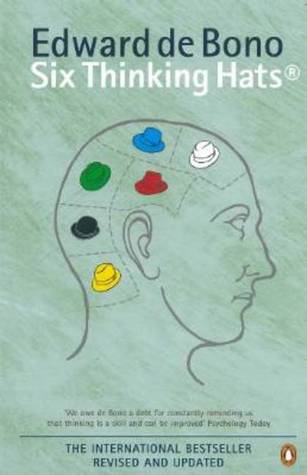
This is a simple method for approaching decisions that forces everyone to look from different angles, one at a time. The concept is great and I’d highly recommend this book as a way to raise awareness of the different ways of looking at problems. The book is short and it could be shorter. In practice the approach can seem infantilising, although I’m sure as de Bono claims, for some groups the method has worked wonders. For me the value is in its use on a personal level; noticing the different perspectives and using them…without annoying everyone by talking about hats.
THE FIRST 90 DAYS BY MICHAEL WATKINS
Recommendation: 9/10 | Reviews on Amazon*
Essential reading if you’re about to start a new job in a leadership role; whether you’ve been promoted or joined a new company. The book is well structured and provides clear strategies for approaching the new challenge and setting yourself up for success. Every time I change roles, I re-read this book.
EXTREME OWNERSHIP - BY JOCKO WILLINK AND LEIF BABIN
Recommendation: 9/10 | Reviews on Amazon*
I really like the concept of Extreme Ownership; a leader owns everything in their world, “there is no-one else to blame”. It’s written by two ex U.S. Navy SEAL officers who served in Iraq. Each leadership principle is given along with examples from their time in combat, as well as what they’ve seen whilst consulting in industry. All the principles in the book are important, however some of the chapters are better than others; in terms of the combat story, principle and business story pattern each follows. In particular “no bad teams, only bad leaders” was standout for me. It’s definitely something I’ll use and recommend to others. To borrow a line from the book, what’s in there is simple, but it isn’t easy. A must read for leaders of any rank.
FOREVER EMPLOYABLE - BY JEFF GOTHELF
Recommendation: 6/10 | Reviews on Amazon*
I like the way Jeff takes us through his personal epiphany that led to the central idea of this book; to become a well known expert in a particular niche and have employers seek you out. The message is good but you really could get the key points across in an article (it’s a very short book as it is). Useful enough to recommend though.
TEAM TOPOLOGIES - BY MATTHEW SKELTON AND MANUEL PAIS
Recommendation: 7.5/10 | Reviews on Amazon*
The authors have pulled together a lot of wisdom to create some simple, easy to use patterns for team design. It provides many examples, diagrams and case studies which makes them “real”. The central points are simple (that’s the point), so the book could be a lot shorter but I’d certainly recommend it to anyone setting up teams and I’m sure I’ll refer back to it.